A spelling bee game is a fun word puzzle that challenges you to create as many words as possible from seven letters displayed in a honeycomb-style arrangement. Each answer must contain the center letter and have at least four letters. The daily spelling bee introduces a new puzzle every 24 hours, giving players a fresh vocabulary challenge each day. You can also search for a pangram, which uses all seven letters in a single word and provides an extra point bonus. Enjoy a free spelling bee game online with no account, subscription, or paywall required.
Getting started with a spelling bee game is easy, whether you are playing for the first time or already enjoy word puzzles. Use these four steps to understand the basics and make the most of each daily spelling bee.
Look at the seven letters arranged in the honeycomb and identify the center letter first. Every word you enter must contain that middle letter and have at least four letters. You can use a letter more than once, so try different combinations instead of limiting yourself to words where each letter appears only once. Starting with familiar short words can help you build momentum.
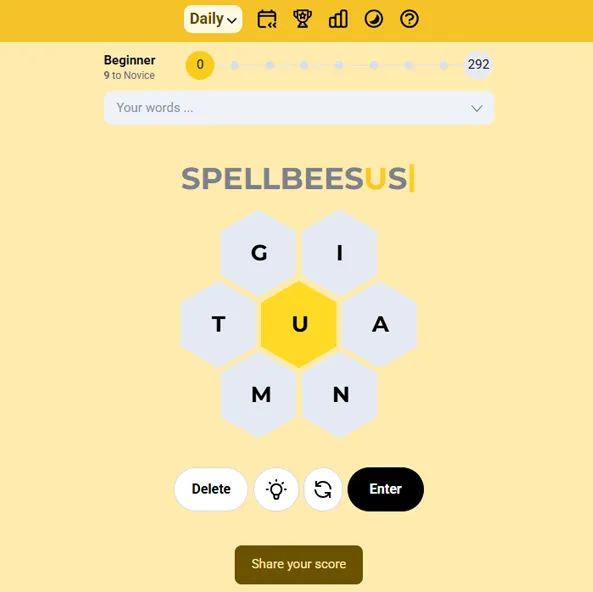
Each correct word contributes points to your score. Four-letter answers are worth one point, while longer words generally earn points based on their length. A seven-letter word can earn seven points, and discovering a spelling bee pangram gives you an additional bonus because it uses every letter in the puzzle. If the available combinations become difficult to see, shuffle the letters to look at the hive from a different arrangement.
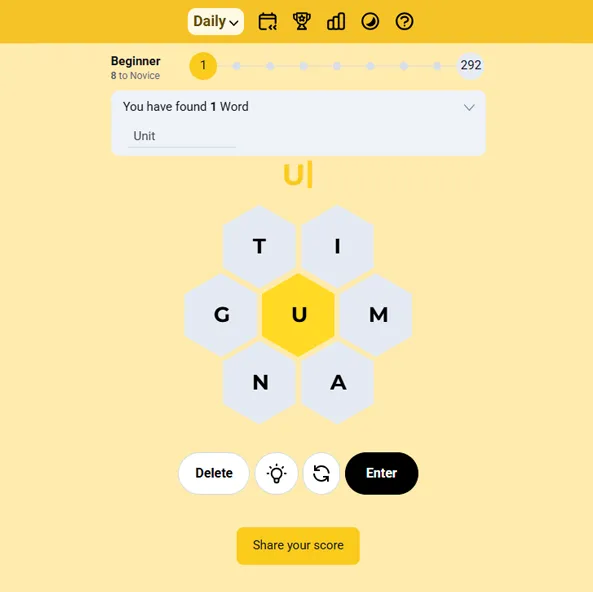
Keep searching for new answers as your word list grows. Your progress is reflected through different achievement levels, giving you a way to measure how well you performed in the puzzle. Reaching the higher ranks requires finding a large portion of the available points. Try to go beyond the obvious answers and think about prefixes, suffixes, plurals, and less common vocabulary. A new spelling bee today challenge gives you another opportunity to improve.
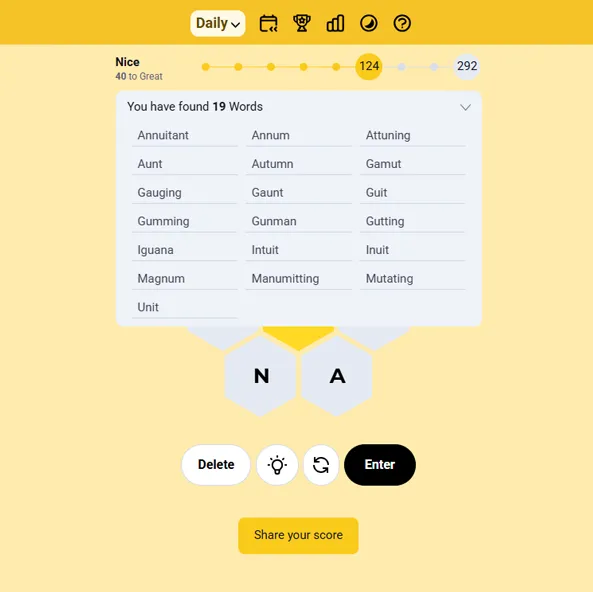
Looking back at an earlier puzzle can be a useful way to learn. Once a daily challenge has ended, reviewing words you missed can reveal unfamiliar vocabulary and show you patterns that may help with future puzzles. Keep track of interesting words and try using those patterns in your next spelling bee game online. Returning regularly is one of the best ways to build vocabulary while improving your solving skills.
A spelling bee game is a daily word puzzle built around seven letters displayed in a honeycomb pattern. One of those letters is placed in the middle, and it must be included in every word you create. Your goal is to discover as many acceptable words as possible while following the puzzle's rules. Each answer needs to contain at least four letters, and you are free to reuse the available letters as often as needed.
The concept is easy to understand, but finding every possible word can become surprisingly challenging. That combination of simple rules and increasingly difficult word discovery makes the spelling bee game an enjoyable choice for vocabulary practice and daily wordplay. Before starting a puzzle, it helps to understand the conditions that determine whether an answer is valid:
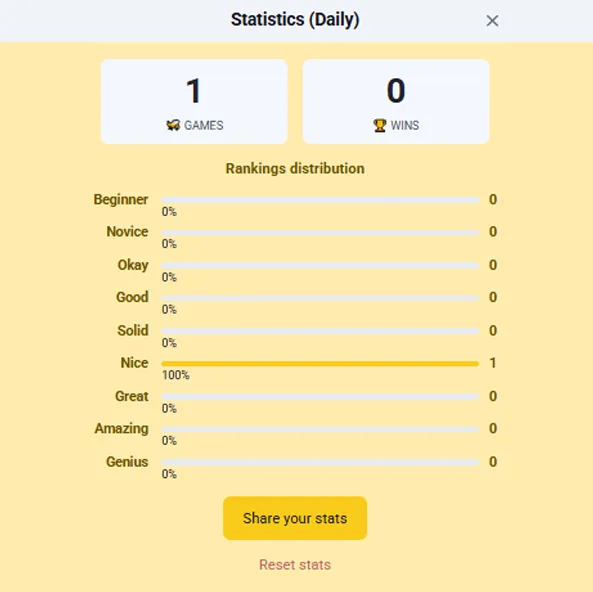
As you discover valid answers, your score increases and you move through different performance levels, from Beginner up to the highest status of all: Queen Bee. A new daily spelling bee puzzle provides a fresh challenge each day. If you want more practice instead of waiting for the next daily reset, Spelling Bee Unlimited generates additional puzzles on demand so you can keep playing and testing your vocabulary.
Knowing how points are awarded can help you decide which words to search for first. Short answers are useful for building your word list, but longer words can increase your score much faster.
| Word Length | Points |
|---|---|
| 4 letters | 1 point |
| 5 letters | 5 points |
| 6 letters | 6 points |
| 7 letters | 7 points |
| 8 or more letters | 1 point for each letter |
| Pangram | Regular word score + 7 bonus points |
One of the most valuable discoveries in a spelling bee is the pangram, a word that contains all seven letters from the current honeycomb at least once. Because it uses the complete letter set, it receives the normal score for its length plus an additional seven-point bonus.
Finding a pangram can also give you a useful clue about the puzzle. Once you identify a word containing all seven letters, examine its individual parts and letter combinations. You may notice smaller words, prefixes, suffixes, or other patterns that lead to answers you had previously overlooked.
| Rank | What It Represents |
|---|---|
| Beginner | Just getting started with the puzzle |
| Novice | Becoming familiar with the letter set |
| Okay | Making steady progress |
| Good | Building a respectable word list |
| Solid | Showing good vocabulary skills |
| Nice | Performing above the basic level |
| Great | Finding a strong selection of words |
| Amazing | Demonstrating excellent word-building ability |
| Genius | Achieving an exceptional score |
| Queen Bee | Finding every valid word in the puzzle |
Reaching Genius takes more than finding a few obvious answers. You need to explore different word patterns, recognize related forms, experiment with endings, and make good use of all seven letters. If you manage to uncover the complete collection of accepted answers, you can achieve the coveted Queen Bee status.
A spelling bee pangram is one of the most rewarding discoveries in a puzzle. It is a word that contains every one of the seven letters shown in the honeycomb at least once. Pangrams are especially valuable because they receive the word's regular points along with a seven-point bonus.
If you are searching for the spelling bee pangram today, begin by looking for words that can incorporate the less common letters in the hive. You can also rearrange the letters with the shuffle option when you feel stuck, or check Spelling Bee Hints for a nudge that shows how many words start with each letter pair without giving the answers away. Instead of repeatedly looking at the same combinations, changing the arrangement can help you notice patterns that were easy to miss. Another useful approach is to think about common prefixes, suffixes, and word endings. Once you discover one longer word, examine its structure and see whether removing or changing part of it produces additional valid answers.
There are different ways to enjoy a spelling bee word game depending on how much time you want to spend solving puzzles. A daily challenge is ideal when you prefer one fresh puzzle to work on each day, while unlimited play is better for extended practice.
| Feature | Daily Challenge | Unlimited Play |
|---|---|---|
| Puzzle availability | One new puzzle each day | Additional puzzles whenever you want |
| Best suited for | Daily routines and casual play | Practice and extended sessions |
| Progress | Track your current challenge | Continue working through multiple puzzles |
| Sharing | Compare your daily result | Share individual puzzle results |
| Pangrams | Included in the puzzle | Included in the puzzle |
The free spelling bee game is a convenient way to build a daily word-solving habit without making the experience complicated. You can focus on one challenge, try to improve your previous performance, and return when the next puzzle becomes available. For players who want to spend more time practicing, Spelling Bee Unlimited provides an opportunity to experiment with different strategies and expand vocabulary beyond a single daily puzzle.
If you enjoy the New York Times Spelling Bee format but want a free way to practice the same puzzle, an online spelling bee game covers the identical core rules: seven letters, the center letter required in every word, a search for longer answers, and a hidden pangram. The difference is access, a free platform doesn't cut you off at an early rank once you're not a subscriber.
| Feature | Free Spelling Bee Game | NYT Spelling Bee |
|---|---|---|
| Daily word challenge | Available | Available |
| Free access | Yes | Access may be restricted |
| Account required | Depends on platform | Depends on access level |
| Additional puzzles | Available on some platforms | Varies |
| Previous puzzle practice | May be available | Available |
| Hints or assistance | Available on some platforms | Varies |
| Device compatibility | Works in a web browser | Web and supported apps |
The appeal of the spelling bee game online free format is its simplicity. You can open a puzzle, study the seven letters, and immediately begin looking for words. There is no need for complicated controls or extensive setup, making this type of word puzzle suitable for quick breaks as well as longer practice sessions.
One reason spelling bee games have such broad appeal is that the same basic puzzle can feel completely different depending on the player's vocabulary. Everyone works with the same letter set, but each person may discover a different collection of words. Beginners can concentrate on familiar vocabulary, while experienced players can search for unusual terms and try to complete the entire word list.
A spelling bee for adults can be an enjoyable alternative to more fast-paced forms of digital entertainment. The focus is on recalling vocabulary, recognizing familiar word structures, and experimenting with different combinations of letters. Regular word puzzles can encourage you to revisit words you already know while exposing you to less familiar vocabulary. The relaxed format also makes a spelling bee game easy to fit into a morning routine, lunch break, or evening activity. Rather than relying on speed alone, success comes from careful thinking and knowledge of language.
Students can use a free spelling bee game as an informal way to practice vocabulary outside
traditional lessons. Creating words from a limited collection of letters encourages players to
notice common endings, beginnings, and word patterns.
For younger learners, the challenge can also turn vocabulary practice into an interactive activity. Teachers, parents, and students can choose puzzles appropriate to their level and use unfamiliar answers as opportunities to learn new words and their meanings. For a structured starting point, the list of spelling bee words by grade level breaks vocabulary down from beginner to advanced.
People interested in competitive spelling can use an online spelling bee as an additional vocabulary exercise. Although a word puzzle is different from a traditional spelling competition, searching through a restricted set of letters encourages familiarity with unusual words and common linguistic patterns. Unlimited practice can be particularly useful because players can work through multiple letter combinations instead of stopping after one daily challenge. Over time, this can help develop greater confidence when encountering unfamiliar vocabulary.
| Factor | Spelling Bee Game | Waffle | Other Word Games |
|---|---|---|---|
| Main objective | Build valid words | Rearrange letters | Varies by game |
| Letter usage | Reuse letters to form words | Rearrange provided letters | Depends on the puzzle |
| Vocabulary focus | High | Moderate to high | Varies |
| Pangram concept | Common feature | Not usually used | Depends on the game |
| Playing style | Explore and discover words | Solve within puzzle constraints | Different mechanics |
This variety is what makes bee games online appealing to different types of players. Someone who enjoys discovering vocabulary may prefer a spelling bee word game, while another player might enjoy arranging letters or solving a fixed word grid.
The appeal of spelling bee puzzles comes partly from the gap between the words you can
immediately see and the words you know are probably still hidden within the letter set. Finding
the obvious answers is only the beginning. As your list grows, you start looking for longer
words, unusual combinations, and variations that you may have overlooked.
The scoring system adds another layer of motivation. A player can set a personal goal, aim for a
higher rank, search specifically for a pangram, or attempt to discover every accepted answer.
Because there is no single strategy that works for every letter set, each puzzle encourages a
slightly different approach.
The social aspect can make the experience even more enjoyable. Players can compare scores,
discuss difficult words, and share interesting discoveries with friends. Seeing an answer that
someone else found can also introduce you to vocabulary you might not have considered.
Ready to put your vocabulary to the test? Start with the current spelling bee today challenge and work through the seven available letters. Remember to include the center letter in every answer, look for longer words, and keep an eye out for a pangram.
You can play at your own pace and return to the puzzle whenever you have time. Once you have
explored the current challenge, additional spelling bee games can provide more opportunities to
practice word formation and discover unfamiliar vocabulary.
Whether you are looking for a spelling bee game online, a quick daily challenge, or a way to
spend more time improving your word skills, the basic idea remains simple: examine the letters,
think creatively, and see how many valid words you can uncover.
When people search for spelling bee words today, they are often trying to solve a difficult puzzle, check whether their word list is complete, or learn better solving techniques. Before looking at a complete answer list, try a few methods that can help you uncover additional words on your own.
Checking an earlier puzzle after you have finished playing can be a useful learning exercise. Instead of simply memorizing the answers, pay attention to words you missed and identify why they escaped your attention. You may notice recurring prefixes, suffixes, unusual vocabulary, or spelling patterns that become useful in future puzzles.
Puzzle last updated: October 27, 2026
The spelling bee game is a daily word puzzle built around seven letters arranged in a honeycomb, with one letter locked in the center. Players build words of four or more letters using only those seven letters, always including the center one, and letters can repeat. Finding the pangram, a word that uses every letter at least once, earns a scoring bonus.
Tap or type letters from the honeycomb to spell out valid words, making sure every word includes the center letter and runs at least four letters long. Submit each word to add it to your score and climb through the ranking tiers. You can reuse any letter as many times as a word needs.
"Spelling bee today" points to the current day's puzzle, a new seven-letter combination that goes live once every 24 hours. Every player sees the exact same letters on a given day, so scores and word finds can be compared directly with friends or family playing the same puzzle.
The full word list for a finished puzzle typically becomes available once that day's puzzle closes out. While you're still playing, in-game hints can show how many words start with a given letter pair without spoiling the actual words, so you can keep the challenge intact until you're ready for the full answer list.
A new puzzle with a fresh set of seven letters goes live every 24 hours. That daily reset is what keeps the challenge different each day instead of repeating the same grid.
A pangram is any word that uses all seven of the day's letters, with each letter appearing at least once. Every puzzle contains at least one, and because pangrams are usually the hardest word to spot, finding one adds a scoring bonus on top of its normal letter-count points.
Four-letter words are worth a flat one point each, while any word longer than four letters earns one point per letter. A pangram adds a seven-point bonus on top of its length-based score, making it the single highest-value word available in any given puzzle.
Genius is a high-tier ranking awarded once a player reaches roughly 70% of the total points available in that day's puzzle, though the exact score needed shifts from puzzle to puzzle depending on how many words are possible. The one rank above it, Queen Bee, requires finding every valid word.
Yes, alongside the one daily puzzle, an unlimited practice mode is available that generates new letter sets on demand, so you're not limited to a single puzzle per day if you want more reps.
The core rules are identical, seven letters, a required center letter, a four-letter minimum, but access is what differs. The NYT version caps non-subscribers at the early "Solid" rank, while independent versions typically leave every rank open with no account or payment required.
Yes, although it's built on a classic school-competition format, the daily puzzle version is played overwhelmingly by adults looking for a quick vocabulary challenge. Its short length and daily cadence make it an easy habit to pick up regardless of age.
Wordle asks you to guess one specific five-letter word within a limited number of tries. Spelling Bee flips that structure, instead of guessing a hidden answer, you generate as many valid words as you can from a fixed set of letters, rewarding vocabulary breadth over deduction.
Regular play tends to sharpen word recall and pattern recognition, since finding new valid words repeatedly exposes players to prefixes, suffixes, and less common vocabulary they might not otherwise encounter.
The official NYT Spelling Bee isn't fully free. Non-subscribers can play until they hit the "Solid" rank, then get locked out of finishing that day's puzzle. That's why so many players search for a truly free version, sites like this one let you play every rank, every day, with no paywall or account required.
Most people searching for both games together aren't comparing rules, they're looking for one free site that covers both word-game formats instead of paying for two NYT subscriptions. Look for a site that offers both a honeycomb word-building game and a daily letter-guessing game in one place.
Yes. While every puzzle guarantees at least one pangram, it's not unusual for a puzzle to hide two or more. If you've already found "the" pangram and there are still unclaimed high-value words left on the board, check whether a second one is hiding in the list.
On the official NYT site, replaying a specific past puzzle requires a subscription, free play only covers today's grid. Free alternatives handle this differently: instead of a dated archive, they offer full unlimited practice, so you're never "catching up," just generating a fresh puzzle whenever you want one.
When comparing alternatives, check for three things: does it use the same 7-letter honeycomb plus center-letter rule, is it truly free with no account required, and does it offer an unlimited practice mode alongside a daily puzzle. Games that check all three come closest to the original experience.
It's less about vocabulary drills and more about pacing. The puzzle stays "open" all day with no timer forcing you to finish in one sitting, so people dip in and out of it, often comparing notes with a partner, sibling, or friend working the same puzzle. That low-pressure, shareable rhythm is what turns it into a daily ritual for adults, not just a brain-training exercise.